The Best Fishing Grounds Off Oahu’s Coast — FADs, Ledges, and Drop-Offs
Ask any experienced Oahu angler where the big fish are, and you’ll quickly learn it’s not a random guess; it’s about understanding the island’s underwater geography. Oahu’s fishing grounds are shaped by dramatic depth changes, engineered fish aggregation points, and underwater features that concentrate baitfish and, in turn, the game fish that hunt them. Here’s a closer look at exactly where and why the big fish congregate around Oahu.
Unlike many mainland fishing destinations where the ocean floor slopes gradually for miles offshore, Oahu’s underwater terrain drops off dramatically not far from shore. The island itself is essentially the peak of an underwater volcanic mountain, meaning the seafloor plunges steeply into deep water within a relatively short distance from the coastline compared to continental shelf fishing grounds.
This dramatic drop-off geography is a huge part of why Oahu offers such productive fishing so close to Honolulu. Anglers don’t need to travel enormous distances to reach genuinely deep water where pelagic species like marlin, ahi, mahi-mahi, and ono are commonly found, a real advantage compared to destinations where deep-water species require hours of travel just to reach viable fishing grounds.
Fish Aggregation Devices (FADs): What They Are and Where Oahu’s Are Located
Fish Aggregation Devices, commonly known as FADs, are anchored buoys placed in strategic deep-water locations that naturally attract baitfish, which in turn draw larger predatory species looking for an easy meal. Hawaii’s FAD program has placed these devices at various points around Oahu specifically because they reliably concentrate fish activity in otherwise vast, open ocean.
Charter captains who fish Oahu regularly know these FAD locations intimately and factor them directly into trip planning, since fishing near an active FAD dramatically increases the odds of encountering species like mahi-mahi, ono, and occasionally larger pelagics compared to blind trolling in open water without any reference point.
Why FADs Work So Well
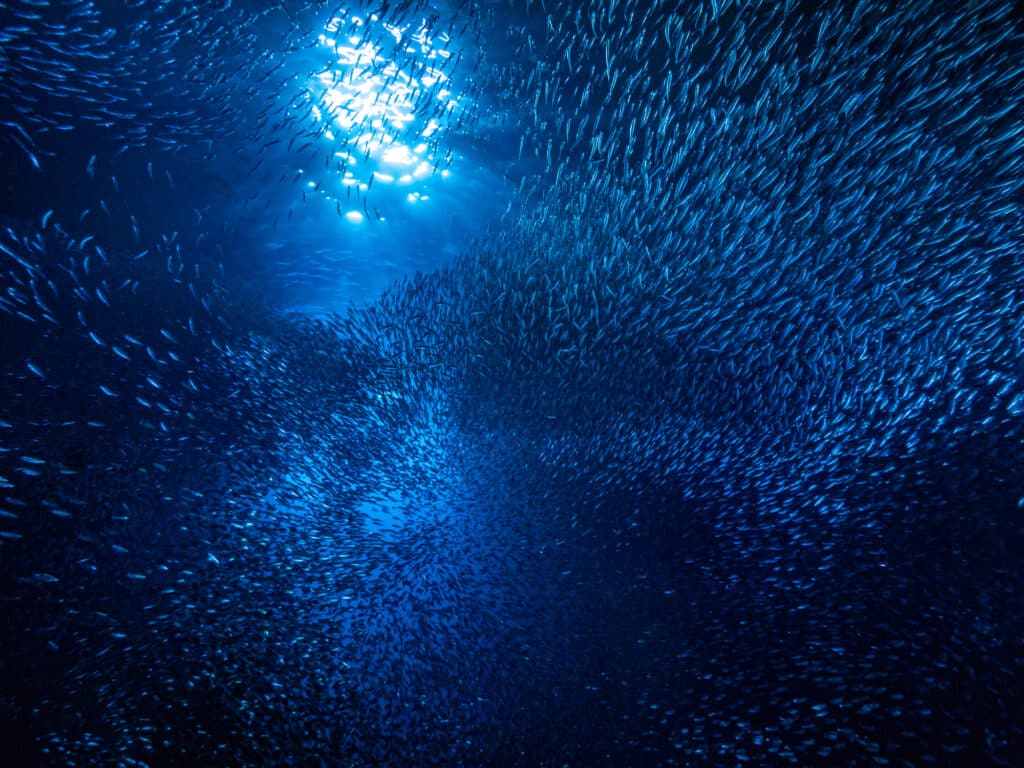
The logic behind FADs is straightforward: baitfish are drawn to any floating structure in open water, likely for shelter and orientation, and once baitfish congregate, predator species follow close behind. This creates a reliable, semi-predictable fishing location in an ocean environment that would otherwise require covering enormous distances to find comparable fish concentrations.
Underwater Canyons and Ledges That Attract Big Game Fish
Beyond FADs, Oahu’s natural underwater terrain includes canyons, ledges, and rocky structure that create the same fish-concentrating effect as an artificial FAD, just through natural geology instead. These structures disrupt current flow and create nutrient upwellings that support baitfish activity, which then attracts the larger species anglers are after.
Ledges in particular, sharp underwater drop-offs where the seafloor transitions abruptly from shallower to much deeper water, are prime real estate for bottom fish and are also frequently productive for trolling along the edge where pelagic species patrol looking for baitfish pushed up against the structure.
The “1,000 Fathom Curve” — Where Deep-Water Species Concentrate
One of the most significant underwater features around Oahu is what local anglers often refer to as the 1,000 fathom curve, the point where the seafloor depth reaches roughly 6,000 feet. This is where many of the most sought-after deep-water pelagic species, big ahi, marlin, and other blue-water gamefish, are most commonly found, since this depth and the associated current patterns create ideal hunting conditions for these apex predators.
What makes Oahu special is how relatively close this deep-water zone sits to shore compared to many other fishing destinations worldwide, meaning charter trips can reach serious deep-water fishing grounds without the extended run times common elsewhere.
Honolulu’s Advantage: Quick Access to Deep Water From Kewalo Basin
Departing from Kewalo Basin in Honolulu gives charters a significant head start compared to ports located further from Oahu’s steepest underwater drop-offs. This proximity means more actual fishing time and less time spent running to productive grounds, a real advantage for visitors with limited time who want to maximize their chances of a great day on the water.
North Shore vs. South Shore vs. West Coast Fishing Grounds
Each side of Oahu offers distinct fishing characteristics based on prevailing currents, seasonal patterns, and underwater geography. The North Shore tends to see more dramatic seasonal current shifts and can produce excellent action during certain times of year, particularly for pelagic species following bait migrations. The South Shore, close to Honolulu and Kewalo Basin, offers reliable year-round access to deep water with a shorter run time, making it a favorite for charters balancing travel time with fishing quality. The West Coast (Leeward side) offers its own productive grounds, often with calmer conditions depending on trade wind patterns, appealing for certain species and fishing techniques.
Final Thoughts
Understanding Oahu’s underwater geography, from strategically placed FADs to natural ledges and the dramatic 1,000 fathom curve, is exactly what separates a good fishing trip from a great one. This is precisely the local knowledge an experienced charter brings to every trip, targeting the specific structure and depth where fish are most likely to be active on any given day.