Native Hawaiian Fish in Kona: Your Guide to Sacred Ocean Life
Have you ever wondered what sacred marine life swims beneath the crystal-clear waters of Kona? The volcanic coastline of Hawaii’s Big Island hosts one of the world’s most extraordinary marine ecosystems, home to vibrant Native Hawaiian fish species that have thrived here for thousands of years.
This comprehensive guide reveals the remarkable Native Hawaiian fish you’ll encounter in Kona’s waters. You’ll discover their traditional Hawaiian names, learn about their cultural significance, and understand why protecting these species matters more than ever. Whether you’re planning your first snorkeling adventure or you’re a seasoned diver, this knowledge will transform your underwater experience.
Kona’s Unique Marine Ecosystem
Kona’s marine environment stands apart from other tropical destinations. The Big Island’s volcanic activity creates nutrient-rich waters that support an incredible diversity of fish species. Coral reefs flourish in these conditions, providing shelter and food for countless marine creatures.
What makes Kona truly special is the presence of endemic species—fish found nowhere else on Earth. These Native Hawaiian fish have evolved in isolation over millions of years, developing unique characteristics and behaviors that make them perfectly adapted to local conditions.
The waters off Kona’s coast benefit from minimal freshwater runoff and exceptional visibility. This clarity allows sunlight to penetrate deeper, supporting healthy coral growth and creating ideal conditions for both fish and the humans who come to observe them.
Significant Native Hawaiian Fish Species
Native Hawaiian fish represent more than just marine biodiversity—they’re living connections to ancient Hawaiian culture and traditions. These species played crucial roles in traditional Hawaiian society, providing sustenance, serving in religious ceremonies, and inspiring countless legends and stories.
Understanding these fish requires appreciating their Hawaiian names, which often describe their appearance, behavior, or cultural importance. Each name carries deep meaning, reflecting the intimate relationship between Native Hawaiians and their ocean environment.
Let’s explore the most significant Native Hawaiian fish species you’ll encounter in Kona’s waters.
Humuhumunukunukuapua’a (Reef Triggerfish)
The humuhumunukunukuapua’a, Hawaii’s official state fish, is arguably the most recognizable Native Hawaiian fish. This reef triggerfish gets its lengthy name from its pig-like snout and grunt-like sounds—”humuhumu” refers to the triggerfish, “nukunu” means snout, and “apua’a” means pig.
You’ll easily spot these colorful fish in Kona’s shallow reef areas. They display vibrant patterns of blue, yellow, and black stripes, with a distinctive trigger spine that they raise when threatened. These fish are territorial and will aggressively defend their nesting sites, especially during breeding season.
Culturally, the humuhumunukunukuapua’a represents the playful spirit of Hawaii. Ancient Hawaiians admired their fearless nature and incorporated them into traditional fishing practices and folklore.
Manini (Convict Tang)
The manini, or convict tang, earns its name from the distinctive black vertical stripes across its yellow body, resembling old-fashioned prison uniforms. These herbivorous fish play a vital role in maintaining healthy coral reefs by grazing on algae that could otherwise smother coral growth.
In Kona’s waters, you’ll find manini in large schools, particularly around coral formations and rocky areas. They’re most active during daylight hours, constantly moving and feeding on algae-covered surfaces.
Traditional Hawaiian culture valued manini as both food and medicine. Ancient Hawaiians used these fish in various preparations, and their abundance made them a reliable food source for coastal communities.
Kikakapu (Multiband Butterflyfish)
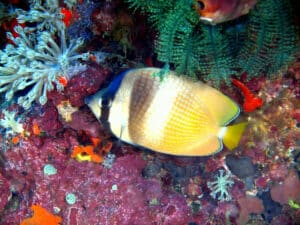
The kikakapu, or multiband butterflyfish, is an endemic species found only in Hawaiian waters. These beautiful fish display intricate patterns of vertical bands across their compressed bodies, with colors ranging from yellow to silver-white.
In Kona, you’ll find kikakapu around coral formations where they feed on small invertebrates and coral polyps. They’re typically seen in pairs, maintaining lifelong monogamous relationships—a trait that made them symbols of loyalty in Hawaiian culture.
The kikakapu’s endemic status makes it particularly important for conservation efforts. Protecting their habitat ensures future generations can witness these unique Native Hawaiian fish.
Kihikihi (Moorish Idol)
The kihikihi, known elsewhere as the Moorish idol, is one of the most striking fish in Kona’s waters. Its distinctive appearance features bold black and white stripes, a bright yellow dorsal fin, and an elongated snout perfect for reaching into coral crevices.
These fish are notoriously difficult to keep in captivity, making wild encounters in Kona’s reefs particularly special. They prefer deeper reef areas and are often found in pairs or small groups, gracefully gliding through the water with their characteristic flowing movements.
In Hawaiian tradition, the kihikihi represents beauty and grace. Their elegant appearance and peaceful nature made them subjects of artistic inspiration and cultural ceremonies.
Palani (Yellowfin Surgeonfish)
The palani, or yellowfin surgeonfish, is a hardy species that thrives in Kona’s diverse marine environments. These fish display a subtle beauty with their olive-green bodies and distinctive yellow fins. They’re equipped with sharp, scalpel-like spines near their tails, which they use for defense.
Palani are highly adaptable, found in everything from shallow tide pools to deeper reef areas. They’re herbivorous, playing an important role in controlling algae growth and maintaining reef health.
Ancient Hawaiians prized palani for their consistent availability and nutritional value. These fish were often dried and preserved, providing protein during times when fresh fish was scarce.
Conservation Efforts Protecting Native Hawaiian Fish
Hawaii faces significant challenges in protecting its native marine species. Climate change, pollution, overfishing, and habitat destruction threaten the delicate balance that has sustained these fish for millennia.
Current conservation efforts focus on several key areas. Marine protected areas around Kona restrict fishing and other activities that could harm native fish populations. These zones allow fish to reproduce and recover, supporting healthy population levels.
Local organizations work tirelessly to monitor fish populations and water quality. Citizen science programs engage visitors and residents in data collection, creating valuable information for conservation scientists.
Education plays a crucial role in conservation success. When people understand the cultural significance and ecological importance of Native Hawaiian fish, they’re more likely to support protection efforts and practice responsible ocean activities.
Eco-Friendly Snorkeling and Diving in Kona
Want to observe Native Hawaiian fish while supporting conservation efforts? Follow these essential guidelines for responsible ocean activities.
Choose reef-safe sunscreen without harmful chemicals like oxybenzone and octinoxate. These substances damage coral reefs and disrupt marine ecosystems. Many local shops in Kona sell reef-safe alternatives that provide excellent protection.
Maintain a proper distance from marine life. While it’s tempting to get close to colorful fish, touching or harassing them causes stress and can disrupt their natural behaviors. Use underwater cameras with good zoom capabilities to capture memorable images without disturbing the fish.
Select reputable tour operators who prioritize conservation. The best companies educate their guests about Native Hawaiian fish and follow strict environmental guidelines. They limit group sizes, choose sustainable diving locations, and support local conservation efforts.
Practice good buoyancy control to avoid damaging coral reefs. Proper diving techniques prevent accidental contact with sensitive marine environments. Take a refresher course if you haven’t dived recently, or consider hiring a local dive guide familiar with Kona’s unique conditions.
Protecting Hawaii’s Marine Heritage for Future Generations
Every time you choose reef-safe sunscreen, support conservation-minded tour operators, or observe these magnificent fish with respect and wonder, you’re contributing to their protection. These small actions, multiplied across thousands of visitors, create a meaningful impact for conservation efforts.
Ready to experience Kona’s incredible Native Hawaiian fish? Start planning your eco-friendly ocean adventure today. Choose operators who share your commitment to conservation, pack reef-safe sunscreen, and prepare for underwater encounters that will leave you with lifelong memories and a deeper appreciation for Hawaii’s marine heritage.
The crystal-clear waters of Kona are waiting to reveal their secrets. Will you join the effort to protect these sacred fish for future generations?